










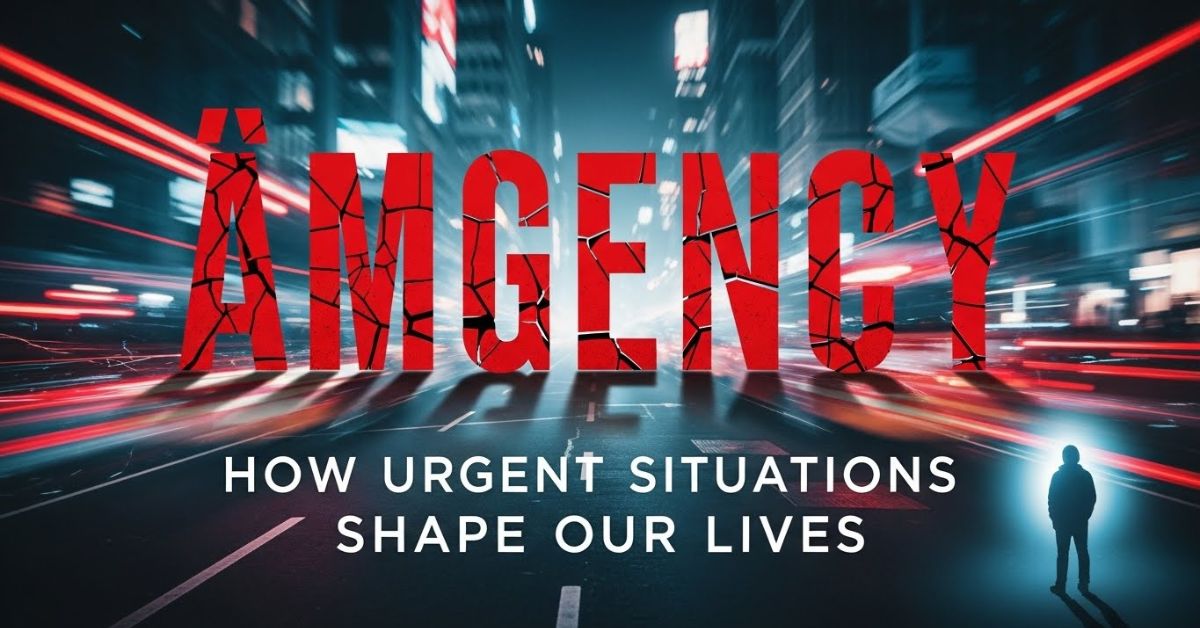
Life is unpredictable. One moment, everything feels under control, and the next, you’re thrust into an ểmgency that demands immediate action. Perhaps you’ve experienced that heart-stopping moment when a loved one collapses, or when sirens wail and evacuation orders flash across your phone screen. An ểmgency refers to a situation that requires urgent attention; it can strike at any time and in various forms—be it a medical crisis, natural disaster, or unexpected financial setback. These moments not only test our courage and decision-making abilities but also reveal the true strength of systems designed to respond swiftly and effectively. In today’s fast-paced world, learning how to navigate these urgent situations has become essential for survival and resilience.
Examples of Common Urgent Situations
Urgent situations often strike when least expected, transforming ordinary days into defining moments. Consider a sudden medical ểmgency, like a heart attack or severe allergic reaction where someone’s airways begin closing. In these critical moments, time becomes the difference between life and death, and every second counts.
Natural disasters also fall under this category with devastating force. Hurricanes and earthquakes can wreak havoc within minutes, leaving little time for preparation or evacuation. Families scramble to grab essentials while nature’s fury bears down on their homes.
Common Crisis Scenarios:
- Medical emergencies: Heart attacks, strokes, severe allergic reactions, traumatic injuries
- Natural disasters: Hurricanes, earthquakes, floods, wildfires, tornadoes
- Transportation incidents: Car accidents, train derailments, plane emergencies
- Workplace crises: System failures, chemical spills, equipment malfunctions
- Personal emergencies: Lost documents while traveling, sudden financial crises, home fires
On a smaller scale, think about car accidents. They require immediate action to ensure safety for everyone involved—calling emergency services, administering first aid, securing the scene. Workplace crises can be just as urgent; a major system failure might halt operations, demanding swift interventions to minimize losses and protect livelihoods.
Even personal situations—like losing your wallet while traveling in a foreign country—can trigger panic and necessitate quick thinking. Each scenario illustrates how unpredictable life can be and how swiftly we must respond when faced with such challenges.
- Also Read Joguart
The Impact of Urgent Situations on Decision Making
Urgent situations force us to make quick choices under intense pressure. When an ểmgency unfolds, the pressure can lead to hasty decisions, often based on instinct rather than careful thought. Your brain shifts into survival mode, prioritizing speed over thorough analysis.
When time is tight, we may rely on heuristics—mental shortcuts—that streamline our thinking. While this can be efficient and has evolved to keep us safe, it doesn’t always yield the best outcomes. A firefighter once told me that the difference between heroes and victims often lies in split-second judgments made with incomplete information.
| Decision Factor | Normal Situation | During Crisis | Impact |
|---|---|---|---|
| Time Available | Hours to days | Seconds to minutes | Forces rapid choices |
| Information Quality | Complete, verified | Partial, uncertain | Increases risk |
| Emotional State | Calm, rational | Stressed, anxious | Clouds judgment |
| Thinking Style | Analytical | Instinctive | Bypasses logic |
Stress plays a significant role too. High-pressure scenarios trigger emotional responses, which can cloud judgment. Instead of analyzing options logically, fear or anxiety might drive actions that seem right in the moment but prove problematic later.
Moreover, urgency breeds a sense of uncertainty. Individuals often feel overwhelmed and unsure about available alternatives, and this confusion complicates decision-making further. In contrast, some people thrive under pressure—they discover clarity amid chaos and act decisively when stakes are high. Understanding these divergent reactions can provide valuable insights into human behavior during critical moments.
How Systems are Designed to Handle Urgent Situations
Systems designed to handle an ểmgency often prioritize speed, efficiency, and clear communication. These frameworks are built with specific protocols, ensuring quick responses when time is of the essence and lives hang in the balance.
Emergency services exemplify this approach beautifully. Firefighters, paramedics, and police have specific procedures to follow in crises, developed through decades of experience and tragic lessons learned. Their training emphasizes rapid decision-making under pressure, turning chaos into coordinated action.
Emergency System Components:
- Clear protocols: Step-by-step procedures everyone understands
- Redundancy: Backup systems when primary ones fail
- Rapid communication: Instant alerts and information sharing
- Regular training: Drills that build muscle memory
- Resource allocation: Pre-positioned equipment and personnel
- Coordination networks: Multiple agencies working seamlessly together
Technology also plays a crucial role in modern response systems. Automated systems can alert first responders or trigger alarms instantly, and this integration minimizes delays that could exacerbate a situation. Smart sensors detect fires, earthquakes trigger automated shutdowns of gas lines, and GPS systems guide ambulances through traffic.
In businesses, contingency plans outline steps for various scenarios—natural disasters or cyber-attacks alike. Regular drills keep employees prepared, fostering an environment where everyone knows their role during a crisis without needing to think about it. Urban planning incorporates resilience too; cities design infrastructure to withstand floods or earthquakes, focusing on minimizing chaos during such events. Each element contributes to a cohesive strategy aimed at managing urgency effectively amidst uncertainty.
The Psychological Effects of Living in a Constant State of Emergency
Living in a constant state of ểmgency can take a significant toll on mental health that accumulates over time. The body remains in fight-or-flight mode indefinitely, leading to heightened anxiety and stress that never fully resolves. Everyday situations become overwhelming as the mind struggles to cope with ongoing pressure, treating minor inconveniences as major threats.
Cognitive functions decline under continuous stress in measurable ways. Decision-making becomes impaired, often resulting in impulsive choices or paralysis by analysis where you can’t decide anything at all. This chaotic environment breeds uncertainty, heightening feelings of fear and helplessness that can pervade every aspect of life.
| Psychological Effect | Short-term Impact | Long-term Consequence |
|---|---|---|
| Chronic Anxiety | Sleeplessness, tension | Panic disorders |
| Cognitive Decline | Poor concentration | Memory problems |
| Emotional Exhaustion | Irritability | Depression |
| Relationship Strain | Arguments, withdrawal | Isolation |
| Physical Symptoms | Headaches, fatigue | Serious health issues |
Moreover, relationships may suffer as communication breaks down under constant pressure. People tend to withdraw or lash out when overwhelmed by urgency, unable to provide the emotional support others need. Trust erodes when everyone is focused solely on survival rather than connection and genuine intimacy.
Over time, chronic exposure to emergencies can lead to burnout and even PTSD-like symptoms that require professional intervention. Individuals may find it hard to relax or enjoy life’s simple pleasures amid this perpetual turmoil—a sunset loses its beauty when you’re constantly scanning for the next threat.
How Urgent Situations Affect Everyday Life and Society
Urgent situations ripple through everyday life, influencing decisions big and small in ways we often don’t recognize. When an ểmgency strikes, people often feel compelled to act quickly, and this instinct can lead to hasty choices that may not always prioritize long-term outcomes or consider all stakeholders.
Communities band together during crises, showing remarkable resilience and solidarity. A natural disaster or public health scare can transform strangers into neighbors working towards a common goal, sharing resources and looking out for vulnerable members. Yet, this unity can also expose underlying tensions in society—disparities in who receives help first, who has resources to evacuate, and who bears the heaviest burden of recovery.
Businesses adapt swiftly to urgent needs, recalibrating services and products almost overnight. Innovations emerge from these pressures; new solutions arise when time is of the essence. Think of how quickly restaurants pivoted to delivery-only models or how manufacturers retooled to produce essential supplies during recent crises.
Societal Changes During Crises:
- Rapid policy changes and new regulations
- Shifts in consumer behavior and priorities
- Acceleration of technological adoption
- Changes in social norms and expectations
- Redistribution of resources and attention
- Evolution of community support networks
On a personal level, constant exposure to emergencies heightens stress levels for many individuals. Anxiety becomes a familiar companion as we navigate rapid changes in our environment, checking news feeds compulsively and maintaining heightened vigilance. In the end, urgent situations reshape how we interact with each other and how society functions at large, leaving permanent marks on culture and institutions.
Coping Strategies for Dealing with Urgent Situations
Facing an ểmgency can be overwhelming, but developing effective coping strategies is essential for navigating these intense moments without being consumed by them.
First, prioritize your response methodically. Assess the situation quickly and determine what needs immediate attention versus what can wait. This clarity helps reduce anxiety and prevents wasted effort on less critical tasks. A veteran emergency room nurse once told me: “The urgent rarely kills you; panic does.”
Effective Coping Techniques:
- Prioritization: Identify what truly needs immediate action
- Mindfulness practices: Deep breathing or grounding exercises to stay present
- Social connection: Reach out to trusted friends or family for support
- Pre-planning: Create emergency plans before crises occur
- Information management: Stay informed without becoming overwhelmed
- Self-care rituals: Maintain routines that restore your energy
Next, practice mindfulness techniques regularly so they’re available when you need them. Deep breathing or grounding exercises can anchor you in the present moment, allowing better decision-making under pressure. Try the “5-4-3-2-1” technique: identify five things you can see, four you can touch, three you can hear, two you can smell, and one you can taste.
Staying connected with others also plays a crucial role in resilience. Reach out to friends or family members who can provide support and perspective during stressful times. Sometimes just voicing your concerns aloud helps clarify the situation.
Additionally, create a plan ahead of time for potential emergencies—knowing how you will react reduces panic when situations arise unexpectedly. Finally, don’t underestimate self-care afterward. Engaging in activities that restore your energy and calmness is vital for long-term resilience against future crises.
Conclusion: Finding Balance in a World of Emergencies
In a world filled with urgent situations, maintaining balance becomes vital for our wellbeing and effectiveness. Our daily lives often feel like a series of ểmgency scenarios vying for our attention, each demanding immediate response. This constant pressure can lead to fatigue, burnout, and a diminished capacity to respond when genuine crises arise.
To navigate this landscape successfully, it’s essential to prioritize what truly matters. Setting boundaries helps manage your time and energy effectively, protecting space for rest and reflection. Learning to differentiate between genuine emergencies and less critical issues is key—not everything urgent is truly important.
Mindfulness practices can ground us amidst chaos, creating moments of calm that restore perspective. Taking time for self-care allows clarity in decision-making, ensuring we respond from wisdom rather than panic. It’s about creating space where urgency doesn’t dictate every action or consume every thought.
Embracing flexibility also plays an important role in achieving equilibrium. Adapting strategies as circumstances change ensures resilience against the unpredictability of life’s challenges. Finding harmony requires ongoing effort and awareness—recognizing that while emergencies will arise, they don’t have to control our existence or define who we are as individuals and communities.
FAQs
What is an ểmgency?
An ểmgency refers to a situation that demands immediate attention because delaying action could lead to serious harm, financial loss, safety risks, or long-term consequences. These situations require rapid response and often involve elements of danger, uncertainty, and time pressure. They can range from personal medical crises to large-scale natural disasters affecting entire regions.
How do urgent situations affect decision-making?
Urgent situations often force individuals and organizations to make quick decisions under pressure. This can lead to either effective solutions or hasty mistakes, depending on preparation, experience, and emotional regulation. The brain shifts into survival mode, relying on instincts and mental shortcuts rather than careful analysis. Some people perform better under pressure while others become overwhelmed, highlighting the importance of training and psychological preparation.
Are there specific examples of common urgent situations?
Yes! Common scenarios include medical emergencies like heart attacks, natural disasters such as floods or earthquakes, workplace accidents, and significant data breaches in cybersecurity. Transportation incidents, home fires, sudden financial crises, and personal safety threats also qualify. Each type requires specific knowledge and preparedness, though the fundamental principles of staying calm and acting decisively apply across all situations.
What strategies can help manage stress during a crisis?
Coping strategies may involve practicing mindfulness techniques, creating plans ahead of time for various scenarios, staying informed without becoming overwhelmed by news cycles, and talking things out with trusted friends or family members. Physical exercise, adequate sleep, and maintaining routines where possible also help. Professional support from therapists or counselors can be invaluable for processing trauma and building resilience.
How are systems designed to handle emergencies effectively?
Systems are often created with redundancy and rapid response capabilities in mind. For example: emergency services have protocols for response times; hospitals prioritize triage based on severity; technology companies implement security measures for data protection. Regular drills, clear communication channels, pre-positioned resources, and coordination between multiple agencies all contribute to effective responses that minimize harm and facilitate faster recovery.